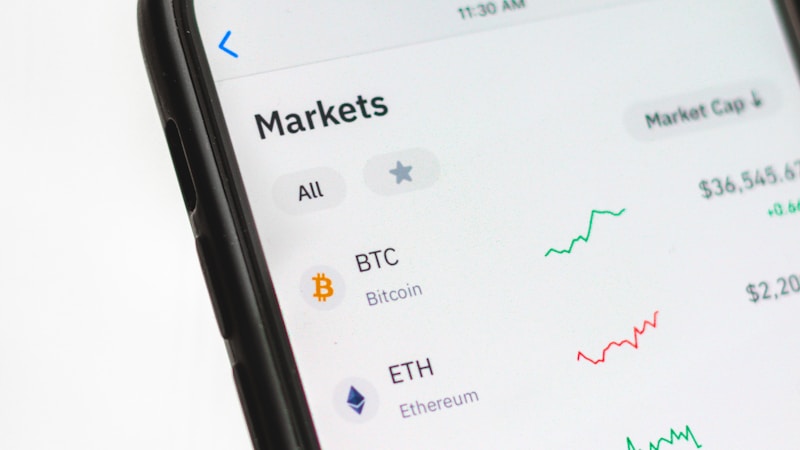


Here is a practical guide to understanding and starting staking on Ethereum and Solana, two of the most popular blockchains for generating passive income.
—
Crypto Staking: How to Earn Passive Income on Ethereum and Solana
Staking has become one of the most accessible ways to grow your cryptocurrency holdings without selling them. In simple terms, it involves locking your tokens to participate in the security and operation of a blockchain running on a Proof-of-Stake model. In return, the network rewards you with interest, often expressed as an annual percentage yield (APY). This guide explains how to proceed on Ethereum and Solana, two major networks.
# Understanding the Basics: Ethereum vs Solana
Before starting, it’s essential to note that staking does not work the same way on these two blockchains.
– Ethereum: Since “The Merge” upgrade, Ethereum uses Proof-of-Stake. To stake directly, you need to lock 32 ETH (a significant amount) and run a validator node. Fortunately, alternative solutions exist for smaller holders.
– Solana: Staking is more flexible here. You can stake any amount of SOL (even 0.1 SOL) by delegating your tokens to a validator of your choice, without needing to manage hardware.
# Step 1: Choose a Staking Method
To avoid technical complexity, most users go through intermediaries.
– For Ethereum (small amounts): Use centralized exchanges (like Binance, Kraken, or Coinbase) or liquid staking protocols (like Lido or Rocket Pool). Liquid staking gives you a representative token (e.g., stETH for Lido) that you can use elsewhere while continuing to earn interest.
– For Solana: You can stake directly from a wallet like Phantom or Solflare. You choose a validator (check their history and fees) and delegate your SOL. Centralized platforms also offer this option.
# Step 2: Secure Your Funds
Security is paramount. Never entrust your tokens to a service promising unrealistic returns (above 10-15% is often a red flag).
– Use a non-custodial wallet (like MetaMask for Ethereum, Phantom for Solana) to keep control of your private keys.
– Check the validator’s reputation: On Solana, prioritize those with good uptime and low commission fees (often between 5% and 10%).
– Beware of unaudited platforms: A liquid staking protocol should have been audited by a recognized firm.
# Step 3: Stake Step by Step
On Ethereum (via a liquid staking protocol):
1. Connect your wallet (e.g., MetaMask) to the protocol’s website (e.g., Lido).
2. Choose the amount of ETH to stake.
3. Validate the transaction. You will receive an equivalent token (stETH) representing your deposit.
4. You can then keep this token to earn rewards, or use it in other DeFi protocols.
On Solana (via Phantom wallet):
1. Open your Phantom wallet and click “Stake”.
2. Select a validator from the list (check the commission rate and number of delegators).
3. Enter the amount of SOL to stake and confirm.
4. Your rewards accumulate automatically. You can withdraw them at any time (with no lock-up period, unlike Ethereum).
# Key Points to Remember
– Unstaking period: On Ethereum, if you stake directly (32 ETH), it takes several days to recover your funds. With liquid staking, you can trade your representative token at any time on a decentralized exchange.
– Yields: They vary. Ethereum typically offers 3-5% APY, Solana 6-8% APY, but these figures fluctuate based on network activity.
– Risks: The crypto price can drop (market risk). A dishonest validator can be penalized (slashing), but this is rare on major networks. With liquid staking, the representative token can lose its peg (e.g., stETH may trade slightly below 1 ETH).
# Conclusion
Staking on Ethereum and Solana is an excellent way to generate passive income, provided you choose your method wisely and remain cautious. For smaller budgets, prioritize liquid staking on Ethereum or direct delegation on Solana via a reliable wallet. Always remember that rewards are not guaranteed and market volatility remains the primary risk. Start with a small amount to test the process, then gradually increase your exposure.
📬
Recevez le briefing crypto de la semaine
Analyses, tendances et opportunités — directement dans votre boîte mail.