The tokenization of financial assets is reaching a decisive turning point in 2026. According to a recent study by Broadridge Financial Solutions, 84% of global financial institutions now rank tokenization among their strategic priorities. This figure, significantly higher than in previous years, confirms that the digital transformation of financial markets through blockchain has become a structural movement.
Mass Adoption Confirmed by the Numbers
Broadridge’s survey, conducted among more than 500 financial institutions worldwide, reveals that tokenization is no longer a marginal experiment. Three-quarters of respondents say they have already launched at least one asset tokenization pilot project, and nearly half plan to deploy production-scale solutions by 2027. These figures illustrate how quickly the technology has moved from concept to deployment across the sector.
The most frequently cited application areas include tokenization of bonds, investment funds, and structured products. Institutions highlight the expected benefits: reduced issuance and management costs, faster transaction settlement, greater transparency through on-chain traceability, and broader accessibility for investors.
HSBC Joins the Bank of England’s Digital Securities Sandbox
In line with this momentum, HSBC, one of Europe’s largest banks, has announced its entry into the Bank of England’s Digital Securities Sandbox (DSS). This regulatory sandbox allows financial institutions to test the issuance and settlement of digital securities using distributed ledger technology (DLT) within a framework supervised by British monetary authorities.
HSBC’s participation in the DSS sends a strong signal to the market. It demonstrates that traditional banks now view tokenization not as a distant prospect, but as infrastructure to build today. HSBC joins other major institutions such as Barclays and Citi, which are already engaged in similar experiments within the regulatory sandbox.
The DSS, launched by the Bank of England in partnership with the Financial Conduct Authority (FCA), aims to modernize UK financial market infrastructure. It enables testing of scenarios such as native digital bond issuance, settlement in tokenized central bank money, and interoperability between traditional systems and distributed ledgers.
Wall Street Accelerates Toward Hybrid Markets
Major American investment banks are keeping pace. Several Wall Street institutions have recently announced significant initiatives in real-world asset (RWA) tokenization. JPMorgan continues to develop its Onyx network, which now processes billions of dollars in tokenized securities transactions daily. Goldman Sachs has launched its own tokenization platform focused on money market funds, while BlackRock and Franklin Templeton already operate tokenized funds on public blockchains.
This acceleration signals the emergence of hybrid markets, where traditional assets coexist alongside their tokenized representations. Market infrastructures are beginning to integrate DLT capabilities alongside conventional settlement systems, creating a bridge between traditional finance (TradFi) and decentralized finance (DeFi).
A Favorable Macroeconomic Context
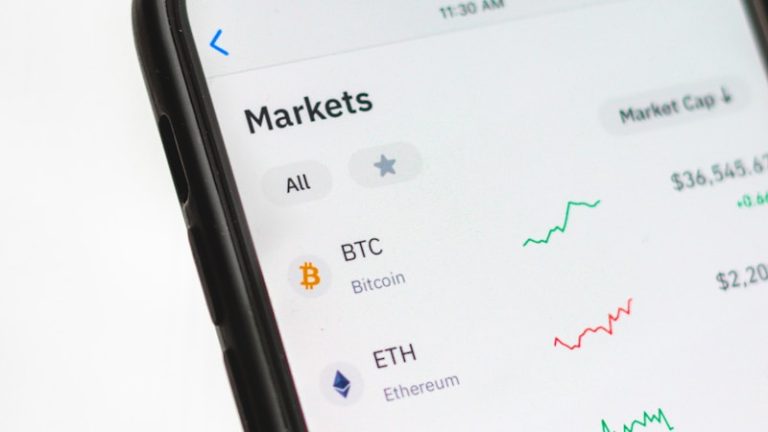
At the time of writing, Bitcoin is trading at $64,614 and Ethereum at $1,876. These price levels reflect a stable cryptocurrency market that provides a favorable environment for the development of tokenization infrastructure. The total market capitalization of tokenized assets now exceeds $50 billion, according to DefiLlama data, with year-over-year growth of over 200%.
Analysts at several major banks estimate that the total addressable market for tokenization could reach between $5 trillion and $16 trillion by 2030, depending on the scenario. Bonds, real estate, commodities, and intellectual property rights rank among the most promising asset classes for this transformation.
Regulatory and Technical Challenges Remain
Despite this positive momentum, several obstacles persist. Regulatory fragmentation across jurisdictions remains a major barrier to large-scale adoption. While the United Kingdom, the European Union with its MiCA regulation, and financial hubs such as Singapore and the United Arab Emirates are moving forward quickly, the United States still lacks a clear federal framework for digital assets.
On the technical side, interoperability between blockchains and banks’ legacy systems poses a significant challenge. Institutions must also address questions of governance, private key custody, and compliance with anti-money laundering (AML) and know-your-customer (KYC) standards.
Tokenization as a New Market Infrastructure
Beyond individual experiments, the entire architecture of financial markets is being transformed. Custodians, clearing houses, and exchanges are developing DLT capabilities alongside banking initiatives. The Bank for International Settlements (BIS) is actively exploring the implications of tokenization for central banks and systemic market infrastructures.
The movement toward asset tokenization shows no signs of slowing down. With 84% of financial institutions making it a strategic priority, mass adoption is no longer a question of “if” but “when.” Initiatives such as HSBC’s participation in the Bank of England’s Digital Securities Sandbox and the deployments by Wall Street giants are shaping the contours of a new financial paradigm, where the boundary between traditional and digital assets is gradually fading.
Conclusion
Asset tokenization is entering its industrialization phase. The Broadridge survey provides quantitative confirmation: financial institutions no longer view tokenization as one technological option among others, but as a central strategic axis for their future development. Between HSBC’s entry into the Bank of England’s sandbox and the concrete deployments by major American banks, the year 2026 marks a turning point in the institutional adoption of this technology.
DailyCryptoNews provides information, analysis, and educational content. No published content constitutes investment advice.
📬
Get the weekly crypto briefing
Analysis, trends and opportunities — straight to your inbox.