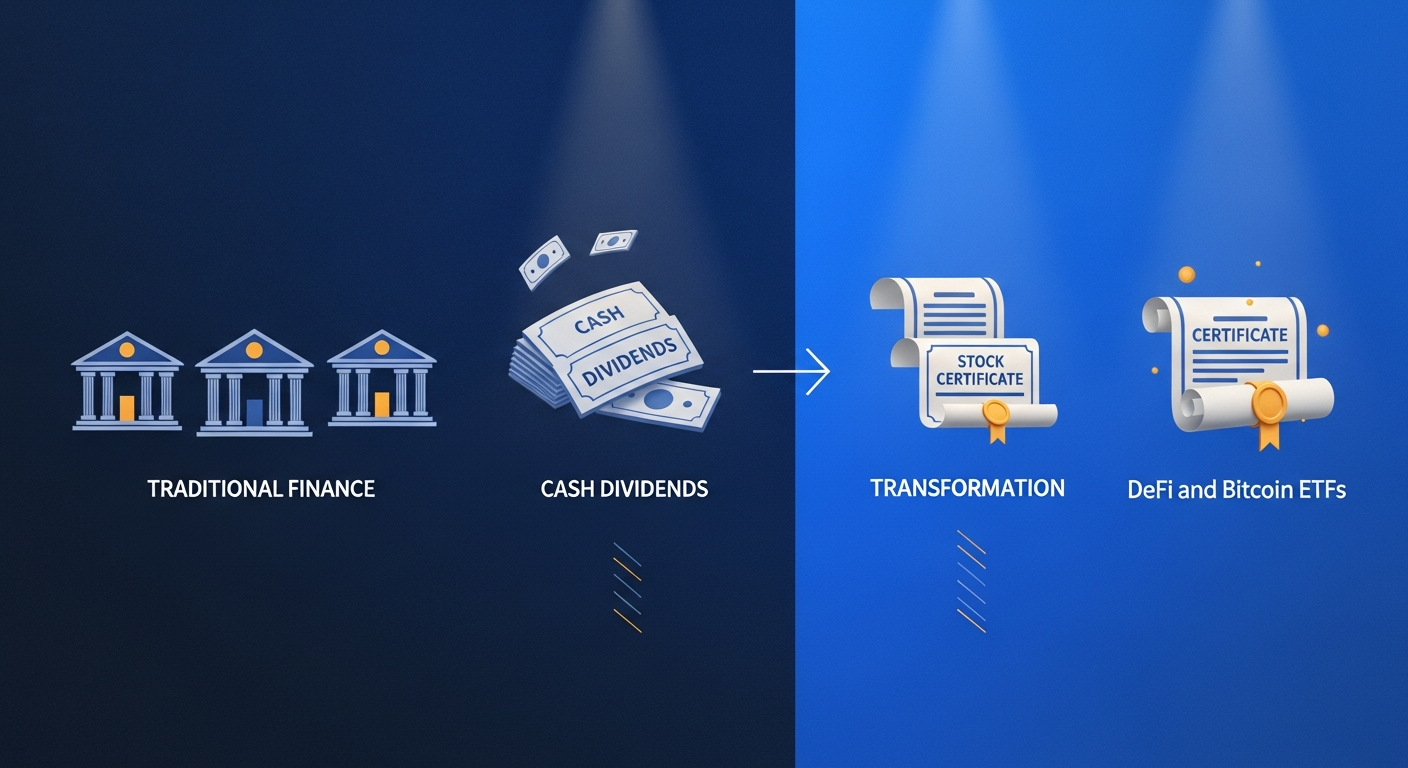


The decentralized finance (DeFi) sector is going through a difficult period. DeFi tokens are leading the losses this week, following the general decline in the cryptocurrency market. But amid this slump, a major development has emerged: asset management giant Franklin Templeton has proposed innovative ETFs that would convert corporate dividends into Bitcoin.
Franklin Templeton Opens a New Path for Bitcoin
Franklin Templeton, one of the world’s largest asset managers with over $1.5 trillion in assets under management, has filed a proposal with the SEC to launch ETFs that would convert corporate dividends into Bitcoin. This innovative product would allow investors to receive their dividends in the form of BTC rather than cash, marking a new step in integrating Bitcoin into traditional finance.
If approved, this initiative could create massive, recurring institutional demand for Bitcoin. Corporate dividends represent hundreds of billions of dollars each year, and even a fraction of these flows converted into BTC would have a significant impact on the market. For more details: Franklin Templeton files for ETFs that convert stock dividends into Bitcoin.
Digital Credit Market Under Pressure
Meanwhile, the digital credit market has been hit by a wave of massive selling. The CEO of Strive, a crypto credit platform, attributed this liquidation to the excessive leverage used by some market players.
This situation recalls the stress episodes in the crypto credit market seen in 2022 and 2023, but with a notable difference: decentralized lending protocols have held up better thanks to automated liquidation mechanisms and improved risk management. Full analysis: Bitcoin ETFs: $6.4 billion in outflows in 30 days, a record.
STRC and the Contagion Effect on DeFi
Strategy’s STRC preferred stock suffered a massive sell-off, creating a contagion effect across the entire crypto market. DeFi protocols that used STRC as collateral or were exposed to it saw their health indicators deteriorate.
Lending protocols like Aave and Compound had to adjust their risk parameters for certain pairs, while automated market makers (AMMs) experienced increased volatility. Trading volumes on DEXs surged, a sign of panic and arbitrage activity.
The Most Resilient DeFi Protocols
Despite the storm, some DeFi protocols are weathering the storm. Liquid staking and restaking protocols (such as Lido and EigenLayer) continue to attract deposits, driven by the demand for yield in a high-interest-rate environment.
Stablecoins, particularly those pegged to the dollar like USDC and USDT, are seeing their market capitalization hold steady, a sign that investors are seeking refuge in stable assets while waiting for a lull.
Conclusion: A Necessary Period of Consolidation
The DeFi sector is going through a period of consolidation that, while painful in the short term, could be beneficial in the long term. The arrival of traditional players like Franklin Templeton shows that the integration of crypto into traditional finance is continuing. The protocols that survive this lean period will emerge stronger and better prepared for the next phase of growth.
?? Disclaimer: This article is provided for informational purposes only and does not constitute investment advice. Cryptocurrency investments carry high risks. Always conduct your own research before investing. dailycryptonews.co cannot be held responsible for any losses.
📬
Get the weekly crypto briefing
Analysis, trends and opportunities — straight to your inbox.