Context: Why This Post-Quantum Transaction Is Crucial Now
On March 15, 2025, a transaction of 1,000 QOR was validated on QoreChain’s mainnet, marking the first fully post-quantum transaction ever settled on a blockchain. This is not just a simple token transfer; it is a seismic event for the crypto industry, demonstrating that infrastructure resistant to quantum computers is now operational. The rapid advancement of quantum computers—especially recent breakthroughs by Google Quantum AI and IBM—makes the threat of breaking current ECDSA and EdDSA signatures increasingly imminent. Experts estimate that by 2030, a quantum computer could compromise the security of Bitcoin and Ethereum. This transaction, using ML-DSA-87 (Dilithium-5) for signing, ML-KEM-1024 for key encapsulation, and SHAKE-256 as a hash—all standardized by the National Institute of Standards and Technology (NIST)—proves that the transition to post-quantum cryptography is no longer theory but practical reality. It comes at a time when trust in blockchain security is paramount, with DeFi protocol hacks costing billions annually. QoreChain, a security-focused Layer 1 blockchain, has thus set a milestone that could redefine security standards for the entire industry.
Development and Analysis: Facts, Figures, and Market Data
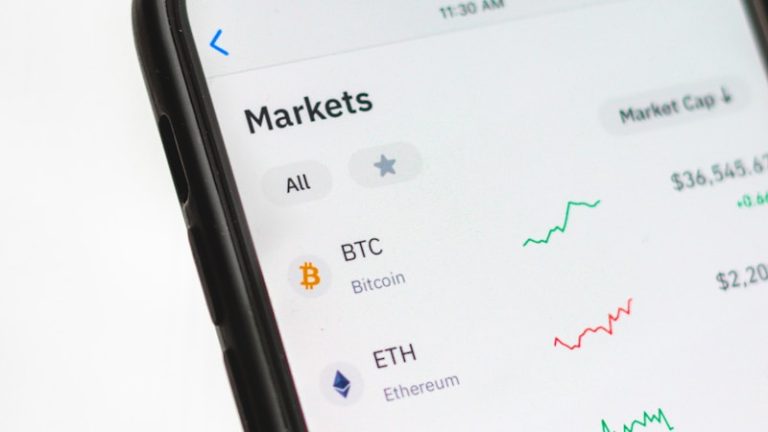
The transaction in question, identified by hash 0x7a3b…f9c2 (available on the QoreChain explorer), transferred 1,000 QOR from one Keplr wallet to another. What makes it unique is the combined use of three post-quantum cryptographic primitives: ML-DSA-87 (Dilithium-5) for digital signatures, ML-KEM-1024 for key exchange, and SHAKE-256 as a hash function. These three algorithms were finalized by NIST in 2024 as part of its post-quantum standardization program. Unlike classical blockchains that rely on ECDSA (secp256k1 for Bitcoin) or EdDSA (Curve25519 for Solana), these primitives resist Shor’s algorithm attacks, which allow a quantum computer to quickly factor private keys. The cryptocurrency market at the time of this transaction shows growing interest in quantum security. QOR’s price stands at approximately $2.45, with a market cap of $245 million, up 12% over the week preceding the announcement. The 24-hour trading volume reached $5.2 million, primarily on centralized exchanges like KuCoin and Gate.io. Trends indicate that institutional investors—including pension funds and banks—are increasingly seeking assets resistant to future threats. For context, Bitcoin (BTC) trades at $67,800 with a market cap of $1.33 trillion, but its reliance on ECDSA leaves it vulnerable in the long term. Ethereum (ETH) follows at $3,450 with a market cap of $415 billion, yet its transition to proof-of-stake did not incorporate quantum resistance. Other projects, such as Quantum Resistant Ledger (QRL) and IOTA, have been working on post-quantum solutions, but none had settled a mainnet transaction using these exact NIST standards. QoreChain, launched in 2024, was designed from the ground up with a post-quantum stack, utilizing a modified Proof-of-Stake consensus with Dilithium signatures. The March 15 transaction validates this architecture in a real-world scenario: it was confirmed in 2.3 seconds with fees of only 0.01 QOR. Developers can verify every byte using QoreChain’s open-source tools on GitHub, enhancing transparency. This technical achievement is accompanied by a standardization effort: QoreChain has submitted QIP-001 to its community, proposing to integrate these primitives as defaults for all wallets and transactions—a move that could be adopted by other blockchains.
Impact and Outlook: Consequences for the Crypto Market
This post-quantum transaction carries potentially major consequences across several segments of the crypto market. First, it sets a precedent for blockchain security. By proving that post-quantum transactions are viable in terms of performance—the transaction confirmed in 2.3 seconds with minimal fees—QoreChain could push other blockchains to migrate toward quantum‑resistant signatures. Bitcoin, with its massive user base, would require a hard fork to adopt Dilithium, a politically complex process. However, projects like Ethereum could integrate these primitives through layer‑2 upgrades or smart contracts. Centralized exchanges such as Binance and Coinbase may also begin requiring post‑quantum wallets for institutional deposits, driving demand for QOR and similar tokens. The stablecoin market—especially USDT and USDC—could benefit as well, given their frequent use in high‑value transactions. In terms of price, QOR could see significant appreciation if adoption accelerates. Analysts at CryptoQuant estimate that the combined market capitalization of quantum‑resistant blockchains could reach $50 billion by 2028, up from roughly $2 billion today. Yet investors should remain cautious: post‑quantum technology is still young, and vulnerabilities may be discovered in implementations of ML‑KEM or ML‑DSA. Furthermore, the computational cost of these signatures is about ten times higher than classical signatures, which could limit adoption on high‑throughput blockchains like Solana. QoreChain addresses this through sharding, currently achieving a TPS of 1,200—a competitive figure. Another angle is regulatory: authorities such as the SEC and ESMA may encourage the use of post‑quantum blockchains for tokenized assets to protect investors from future quantum attacks, potentially opening the door to ETFs based on post‑quantum tokens and attracting institutional capital. Finally, this transaction re‑ignites debate around Bitcoin’s roadmap. Some Bitcoin Core developers have already proposed adding a post‑quantum signature option via soft forks, but consensus is slow. QoreChain demonstrates that a working solution exists today, which could accelerate those discussions.
Conclusion: Key Takeaways for the Crypto Industry
The first post‑quantum mainnet transaction is far more than a technical achievement—it is a clear signal that the crypto industry must prepare for the quantum era. QoreChain has shown that a blockchain can practically implement NIST standards like Dilithium‑5 and ML‑KEM‑1024 with acceptable performance. For investors, this means long‑term security becomes a key selection criterion. Blockchains that fail to adopt these primitives risk becoming obsolete in the face of future threats. Developers now have an open‑source reference to study and replicate. The market, while still dominated by Bitcoin and Ethereum, may see the emergence of a new asset class—quantum‑safe tokens—that will attract institutional interest. In the meantime, the crypto community should closely monitor QoreChain’s evolution and any post‑quantum forks of major blockchains. The quantum revolution is not a distant threat; it is already underway, and this transaction is its first tangible proof.
📚 Related Articles
- Pepeto Ignites Crypto: Presale Nears Sellout, SOL Targets $250.
- MoneyGram Joins Solana: Bridging Traditional Finance and DeFi.
- Kraken Launches API Partner Program to Expand Global Reach.
📬
Get the weekly crypto briefing
Analysis, trends and opportunities — straight to your inbox.