A Resilience That Takes Root
For nearly two weeks now, global financial markets have been rattled by the collapse of the Iran ceasefire — a major geopolitical event that could have triggered widespread panic. Yet a surprising trend is emerging: Bitcoin (BTC) is holding steady around the $63,000 mark, while crude oil oscillates near $75 per barrel. This relative stability, far from being a sign of indifference, reflects a gradual adaptation by investors to a new geopolitical paradigm.
Bitcoin, often described as digital gold, appears to be earning its reputation as a safe haven during times of international tension. While traditional markets experienced significant volatility in the hours following the announcement that negotiations had collapsed, the leading cryptocurrency showed remarkable resilience. Trading in a tight range between $62,500 and $63,500, BTC’s performance demonstrates a growing maturity in the digital asset market.
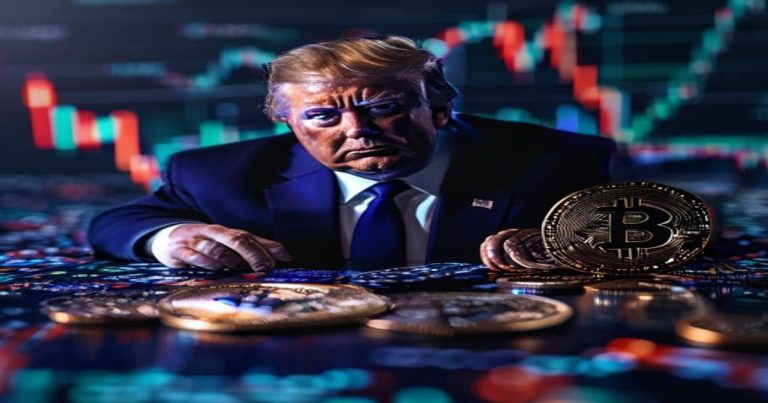
Recent comments from Donald Trump, who mentioned the possibility of a “deal” with Iran, have added an extra layer of complexity to an already nuanced picture. According to several political analysts, these statements could signal a shift in the US posture — moving from direct confrontation toward a more diplomatic approach. This evolving narrative has directly contributed to calming investors’ immediate fears.
Oil Between Tensions and Diplomatic Hopes
Oil, traditionally the most sensitive barometer of Middle Eastern tensions, is trading at around $75 per barrel — a level that reflects a delicate balance between geopolitical risk premiums and global economic outlooks. Analysts have pointed out that oil markets are now incorporating a sustained risk premium tied to Iran, suggesting that investors are not betting on a quick resolution to the conflict.
This stabilization of crude prices at elevated but not catastrophic levels carries direct implications for the global economy. On one hand, it avoids an inflationary shock that would have forced central banks to tighten their monetary policy. On the other, it maintains a discreet but constant pressure on production and transportation costs, which could weigh on economic recovery in the most vulnerable regions.
Market observers have noted that the resilience of the oil market in the face of the Iran escalation stands in contrast to the much more volatile reactions seen during previous Middle Eastern crises. This gradual desensitization of the market may be explained by a deeper understanding of regional dynamics and by the diversification of energy supply sources.
Bitcoin: Digital Gold Put to the Geopolitical Test
Bitcoin’s performance at $63,000 in this tense geopolitical context deserves a closer look. Historically perceived as a risk asset, the cryptocurrency would have been expected, according to traditional patterns, to face significant selling pressure during periods of uncertainty. Yet the opposite is happening: BTC is behaving more like a safe-haven asset than a speculative one.
Several factors explain this shift. First, institutional adoption of Bitcoin has significantly reduced its correlation with traditional risk assets. Investment flows show that strategic allocation funds now consider BTC an essential component of diversified portfolios, alongside gold or government bonds.
Second, the narrative surrounding Bitcoin has fundamentally changed. Where mainstream media outlets still recently spoke of “speculation” and a “bubble,” the discourse has shifted toward “store of value” and “geopolitical neutrality.” In a world where economic sanctions and regional conflicts can freeze assets or disrupt entire financial systems, a decentralized and apolitical asset like Bitcoin becomes increasingly attractive.
Finally, BTC’s resilience at $63,000 is also explained by increasingly constrained supply. Outflows of Bitcoin from exchanges into cold storage have reached record levels in recent weeks, signaling long-term bullish conviction among holders. Combined with the reduction in new Bitcoin issuance due to the halving event, this supply-side dynamic creates a natural price floor.
Trump’s Role and the Evolving Iran Narrative
Donald Trump’s comments about a possible deal with Iran mark a turning point in media coverage of the conflict. Whereas the early weeks were dominated by alarming headlines about military escalation, the possibility of a diplomatic resolution opens a new narrative phase. However, analysts remain cautious: negotiations with Tehran have historically been complex and unpredictable.
What distinguishes the current situation is the market’s ability to simultaneously process multiple contradictory scenarios without panicking. Investors are pricing in both the probability of prolonged escalation and that of diplomatic rapprochement, adjusting their positions accordingly rather than fleeing risk assets en masse.
This relative market maturity is the result of several years of learning. From the oil shocks of the 1970s through the Gulf Wars and the Arab Spring uprisings, investors have developed sophisticated models for assessing the impact of Middle...
Analyse détaillée réservée aux membres
Notre équipe d'analystes a préparé une analyse complète avec données exclusives.
🔒 Paiement sécurisé • Stripe • Sans engagement
Déjà abonné ? Connectez-vous