A revolution in financial asset tokenization
Securitize Corp., a recognized leader in asset tokenization, has just reached a historic milestone by announcing the listing of its own shares, SECZ, directly on the Avalanche and Solana blockchains. This initiative, unveiled on July 2, 2026, marks a clear break from traditional fundraising and public offering practices. For the first time, a company is issuing its tokenized shares on the very day of its initial public offering, offering eligible U.S. investors direct exposure to a regulated, yet natively digital, financial security. This is not merely a technical experiment: it is a demonstration that decentralized finance and capital markets can converge in a concrete and immediate way.
The current context is particularly favorable. While the cryptocurrency market is going through a consolidation phase following the highs of 2024-2025, the tokenization of real-world assets (RWA) is emerging as the next growth driver. According to the latest data, the total market capitalization of tokenized RWAs now exceeds $50 billion, with an average quarterly growth of 15%. Major financial institutions, from BlackRock to Goldman Sachs, are multiplying initiatives in this area. Securitize’s announcement therefore comes at a pivotal moment, where the credibility and scalability of these solutions are expected by the market.
Technical and financial analysis: why Avalanche and Solana?
The choice of Avalanche and Solana is not insignificant. These two blockchains stand out for their high transaction throughput and low transaction costs, essential conditions for handling institutional trading volumes. Avalanche, with its Snowman consensus mechanism, offers near-instant finality and native interoperability via its subnets. Solana, for its part, claims over 2,000 transactions per second with fees under a cent. By choosing these two networks, Securitize maximizes liquidity and accessibility for investors, while minimizing friction. The SECZ token is designed as a security token compliant with U.S. SEC regulations, but it circulates on decentralized infrastructures. It is a bridge between two worlds: the rigor of financial law and the flexibility of DeFi.
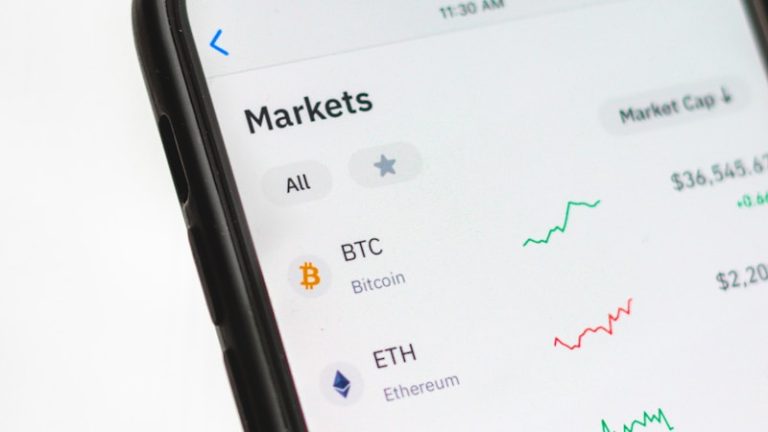
The implications for the crypto market are considerable. First, it legitimizes tokenization as a credible financing vehicle for companies. Second, it paves the way for a new asset class for retail investors, who can now hold tokenized shares via self-custodial wallets or centralized exchanges. In terms of price, the market has not yet fully priced in this new development. The price of AVAX (Avalanche) gained 3.2% in the hours following the announcement, while SOL (Solana) rose by 2.8%. These movements, although modest, reflect positive anticipation. In the longer term, if other companies follow Securitize’s example, demand for these blockchains could increase significantly, supporting their market capitalization. Currently, Avalanche has a market cap of $18 billion, and Solana $42 billion, levels that could be boosted by the influx of corporate tokenizations.
Impact on the crypto market and regulatory outlook
The most immediate impact of this announcement is to strengthen the investment thesis for RWAs (Real World Assets). Institutional investors, long hesitant in the face of pure cryptocurrency volatility, see it as a regulated and tangible entry point. Securitize, by tokenizing its own shares, proves that blockchain technology can serve as a securities ledger without compromising compliance. This could accelerate adoption by other listed companies or those in the process of going public. Furthermore, it sets a precedent for managing dividends and voting rights via smart contracts, even if these aspects remain to be clarified for SECZ.
From a regulatory standpoint, this operation is a real-world test for the U.S. SEC. Until now, security tokens struggled to find their place, caught between the requirement for a centralized ledger and the decentralized philosophy of blockchain. Securitize obtained an exemption under Regulation A+ (Tier 2), allowing a public offering of up to $75 million. This means that non-accredited investors can participate, significantly broadening the pool of potential buyers. If the experiment is successful, other exemptions could be granted, paving the way for massive tokenization of equity markets. The total addressable market is estimated at over $100 trillion in traditional financial securities, of which only a tiny fraction is currently tokenized.
Finally, this announcement has repercussions for the DeFi ecosystem. Lending and yield farming platforms could integrate SECZ as collateral, offering holders additional yield opportunities. Protocols like Aave or Compound could add this token to their pools, thereby increasing utility and liquidity. However, this requires complex technical and legal integration, as security tokens have transfer constraints (whitelisting) that native tokens do not. Development teams are already working on automated compliance solutions via oracles and modular smart contracts.
Conclusion: a turning point for institutional adoption
Securitize’s initiative is not just another experiment in the field of tokenization. It is the first time a company has issued its tokenized shares on the first day of listing, on public blockchains, with full regulatory compliance. This demonstrates that blockchain technology can serve as the foundation for a modern financial market infrastructure that is faster, cheaper, and more accessible. For investors, it is an opportunity to diversify their portfolios with traditional assets, but in digital form, with all the benefits of DeFi. For the crypto market, it is a resounding validation of the RWA thesis and a potential catalyst for a new wave of institutional adoption. The coming months will be crucial to observe the actual liquidity of SECZ and investor enthusiasm, but one thing is certain: the boundary between traditional finance and decentralized finance has just faded a little more.
📬
Get the weekly crypto briefing
Analysis, trends and opportunities — straight to your inbox.