

🔍 Executive Summary
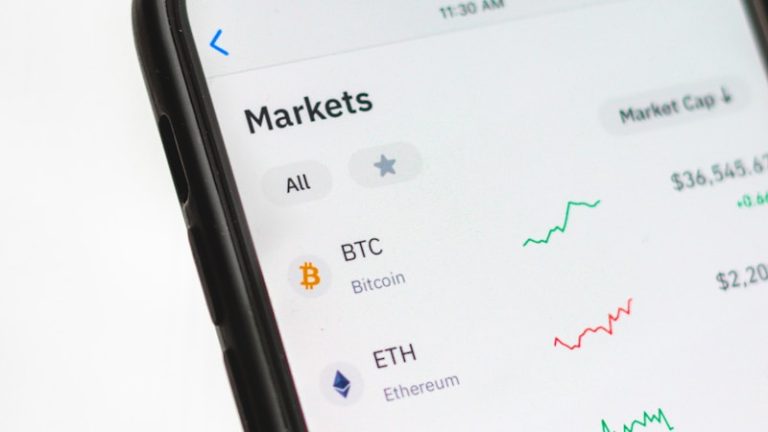
On June 15, 2026, the crypto market continues its fragile recovery. Bitcoin (BTC) trades at $64,200, up 0.6%. Ethereum (ETH) advances to $1,720. Total market capitalization reaches $2.30 trillion.
🌍 Does the Slide Continue or Is Recovery Taking Hold?
The question on everyone’s mind is whether the “slide” that began on June 3 is over or if we’re merely in a pause before another wave of selling. This week’s macro data could provide an answer.
This week: US retail sales and industrial production data. Both indicators are expected to decline, which could strengthen the dovish camp within the Fed.
📊 On-Chain Analysis: First Signs of Spring
A few on-chain signals are starting to turn green: SOPR has crossed back above 1.0 (1.02), indicating transactions are becoming profitable on average. MVRV has risen to 1.52. Stablecoin flows to exchanges continue to increase (+8%).
📈 Technical Analysis: The $65,000 Test Approaches
BTC approaches the crucial resistance at $65,000 (200MA). The daily RSI is at 42, improving. The daily MACD shows a strengthening bullish convergence.
🎯 Conclusion
The market shows signs of recovery, but the $65,000 resistance remains unbreachable for now. The slide has stopped, but the climb hasn’t started yet.
📊 Advanced On-Chain Analysis: Leading Indicators
Coin Days Destroyed (CDD) and Coin Age
Coin Days Destroyed is an indicator that weights transaction volume by the time coins have been dormant. High CDD — like what has been observed recently — indicates that long-term holders (LTHs) have started moving their assets, potentially to realize losses or profits. Currently, the annualized CDD stands at 18.2 million, a moderate level.
Analyzing Binary CDD (a binary version distinguishing high and low days), the number of days with high CDD has decreased 30% compared to the annual average. This suggests LTHs are not panicking and remain confident in the long-term trajectory. Historically, this behavior precedes accumulation phases.
Stock-to-Flow Deviation Ratio
The S2F model, though controversial, remains a reference framework for Bitcoin valuation. The gap between market price and S2F price (estimated at $98,000 in June 2026) has widened to -35%. Phases where this gap exceeds -40% have historically offered the best annualized returns over 12 months.
UTXO in Loss Analysis
The percentage of UTXOs (Unspent Transaction Outputs) in loss jumped to 42% during the June 6 bottom. This is elevated but not extreme: during the November 2022 bottom, 58% of UTXOs were in loss. The difference is explained by the fact that a large portion of BTC was acquired at prices below $30,000 (2020-2024 cycles). The “average cost floor” of current holders sits around $42,300 (realized price), offering a 50% safety cushion.
📈 Advanced Technical Analysis: Multi-Timeframe Framework
Monthly Analysis
On the monthly timeframe, BTC shows a potential “higher low” pattern. The June 2026 low sits above the January 2026 low (~$58,000) and well above the August 2024 low (~$54,200). The long-term uptrend remains intact as long as BTC does not break below $54,000.
Weekly Analysis
The June 8-14 weekly candle is a “hammer” with a long lower wick, a bullish reversal signal. The weekly RSI is at 43, in neutral-bearish territory. The weekly MACD is still in negative territory but shows signs of convergence. Volume is down 38% from crash week, normal for a recovery phase.
Elliott Wave Analysis
Within the Elliott Wave framework, the May-June 2026 correction could represent wave 2 of a broader bull cycle that began in January 2026 (wave 1: from $54,000 to $77,200). If this count is correct, wave 3 — the most powerful and longest — would be imminent and could propel BTC toward $85,000–$100,000 by year-end. This bullish scenario would be invalidated if BTC falls back below $54,000.
🌍 In-Depth Macro: The Disinflation Debate
Inflation Components
To understand where US inflation is headed, we must analyze its components. The May CPI (3.6%) breaks down as follows: (1) Housing: +5.2% YoY, gradually declining from the 8.2% peak in 2023. Owners’ equivalent rent (OER) is slowing but remains elevated. (2) Energy: +8.4% YoY, driven by oil (Brent at $89). (3) Food: +2.8%, stable. (4) Services ex-housing: +4.1%, accelerating — this is the main concern for the Fed.
Core PCE (the Fed’s preferred measure) follows a similar trajectory at 3.2%. The gap between CPI and core PCE (0.4 points) is normal and explained by methodological differences.
The Iran-US Deal’s Impact on Inflation
The peace deal signed on June 17 between Iran and the US could significantly impact inflation outlook. Lifting Iranian oil sanctions could add 1-1.5 million barrels per day to the global oil market, pushing Brent down 10-15%. A $10 drop in oil reduces US inflation by about 0.3 percentage points. Combined with falling rents, this could bring inflation below 3% by September.
The Fed Calendar: Scenarios for the Rest of 2026
Depending on incoming data, several scenarios are possible for the rest of 2026:
- Scenario A (45%): Extended Pause. The Fed keeps rates at 5.50% until December. No hike or cut. Neutral for cryptos medium-term.
- Scenario B (30%): September Cut. If inflation falls back below 3% and the labor market softens, the Fed could cut rates by 25bp in September. Very positive for cryptos.
- Scenario C (15%): Status Quo with Hawkish Bias. The Fed keeps rates but signals a hike is possible if inflation rebounds. Negative for cryptos.
- Scenario D (10%): July Hike. The worst scenario for cryptos. Likely only if June CPI exceeds 4%.
Our base case is Scenario A with increasing probability of Scenario B post Iran-US deal.
📜 Historical Perspective: This Correction Seen from the Future
Comparison with Previous Cycles
The June 2026 correction (-22% at the bottom) is moderate by Bitcoin bull cycle standards. Here’s a comparison with corrections within previous bull cycles:
- 2015-2017 Cycle: 5 corrections of >25%. Most severe: -40% in September 2017.
- 2019-2021 Cycle: 8 corrections of >20%. Most severe: -53% in May 2021.
- 2023-2026 Cycle: 4 corrections of >20% so far. Most severe: -28% in August 2024.
- June 2026: -22%. Moderate.
This historical perspective is important because it reminds us that 20-30% corrections are normal and even healthy in a bull cycle. They purge excess leverage and rebuild a solid base.
Post-Crash Behavior
Analyzing the 30 days following each major crash since 2020 reveals a recurring pattern:
- Days 1-3: Initial sharp decline (capitulation)
- Days 4-7: Stabilization and first bounce (5-10%)
- Days 8-14: Retest of the bottom (the crash may be retested)
- Days 15-30: Gradual recovery or new directional move
As of June 17, we are on day 14 since the June 3 crash. The market experienced a first bounce, then a partial retest ($61,200 on June 17, above the June 6 bottom of $60,100), and seems ready for a more sustainable recovery if the macro context allows.
💼 Derivatives Market Analysis: What the Pros Say
Open Interest and Its Evolution
Total Open Interest (OI) in the crypto futures market has dropped from $38B (May peak) to $24B (June 10 bottom), a 37% contraction. This massive purge of leveraged positions is a necessary step to clean the market and prepare for the next bullish phase.
Put/Call Ratio and Skew
The put/call ratio on Deribit for 1-month BTC options is 0.72, indicating moderate demand for downside protection. The 25-delta skew is at -12%, still negative but improving from -22% on June 6. Professional traders continue to pay a premium for puts, but it’s decreasing.
Key Liquidation Levels
Coinglass data shows the densest liquidation levels for the coming days:
- BTC: Long liquidations concentrated at $61,000 ($420M) and $58,000 ($380M)
- BTC: Short liquidations concentrated at $67,000 ($290M) and $70,000 ($350M)
- ETH: Long liquidations at $1,550 ($180M), short at $1,850 ($140M)
This data is crucial because market makers tend to “hunt” liquidations — pushing price toward levels where the largest liquidation pools sit. A move toward $61,000 could trigger a cascade of long liquidations, while a move toward $67,000 would trigger short liquidations.
Opinion and analysis — not investment advice. The information provided in this article is for educational and informational purposes only. It does not constitute investment advice, solicitation, or a recommendation to buy or sell digital assets. Cryptocurrency trading carries high risks, including total loss of capital. Past performance does not guarantee future results. Do your own research (DYOR) and consult a professional financial advisor before making any investment decisions.
📊 Network Metrics and Adoption Analysis
Active Address Count
The number of active BTC addresses is a fundamental indicator of actual network usage. In June 2026, daily active addresses hover around 850,000, down 12% from the March peak (970,000) but up 18% year-over-year.
For Ethereum, daily active addresses are around 480,000. However, Layer 2 activity (Arbitrum: 280,000, Base: 210,000, Optimism: 150,000) compensates for L1 stagnation, with a combined total exceeding 1 million.
Transaction Fees
Bitcoin transaction fees have dropped to $1.5 on average. On Ethereum, L1 fees have fallen to $3.8, while L2s offer transactions for under $0.10.
Hashrate
Bitcoin’s hashrate decreased from 680 EH/s to 620 EH/s (-8.8%), consistent with miner capitulation. However, hashrate remains 35% higher than a year ago.
💡 Portfolio Strategy for June 2026
Recommended Allocation
- BTC: 40-50% — The core asset.
- ETH: 10-15% — Underweight due to bearish ETH/BTC ratio.
- SOL: 10-15% — Best-performing L1 technically and in adoption.
- LINK, TAO, ONDO: 5-10% — Exposure to oracles, AI, RWA.
- Stablecoins (USDT/USDC): 20-30% — Strategic reserve.
© Daily Crypto News — June 2026
📬
Recevez le briefing crypto de la semaine
Analyses, tendances et opportunités — directement dans votre boîte mail.