An alarm signal in a changing market
The news hit the crypto ecosystem like a guillotine: according to Finbold’s semi-annual report, Bitcoin lost more than 26,000 addresses holding at least one million dollars in BTC during the first half of 2026. This figure, which may seem alarming at first glance, deserves a much more nuanced analysis than simple headlines. As a specialized journalist at DailyCryptoNews.co, I cannot simply relay raw data; we must understand what this hemorrhage means for the market, for investors, and for the very future of the leading cryptocurrency.
We are in July 2026, and the global macroeconomic landscape has profoundly changed since the previous bull cycle. Persistent inflation in several Western economies, geopolitical tensions around new conflict zones, and above all, the massive adoption of decentralized finance by traditional institutions have reshaped the contours of crypto investment. Losing 26,000 millionaire addresses in just six months is a sign that Bitcoin is no longer simply a speculative asset for the ultra-wealthy. It is the symptom of a silent redistribution, a transfer of value from the hands of early adopters to new players, perhaps smaller but more numerous.
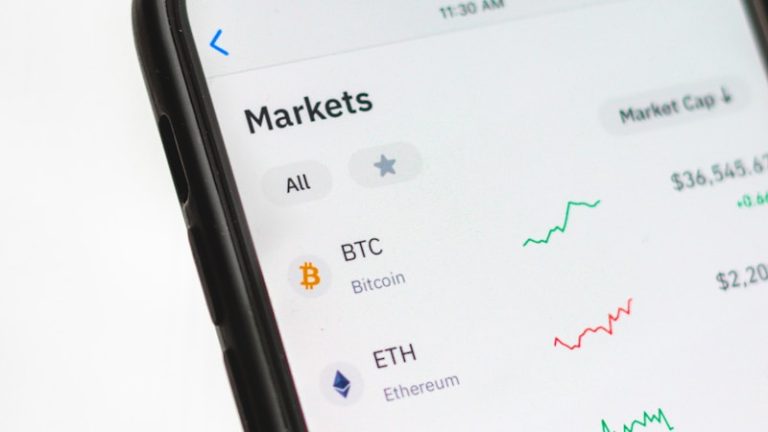
This news comes in a context where the price of Bitcoin is oscillating around $61,700, a drop of approximately 15% from its peak in January 2026. The total market capitalization of crypto has slightly declined, from $2.22 trillion to $2.22 trillion, but this contraction alone does not explain the disappearance of these addresses. We need to dig deeper.
Detailed analysis: who are these 26,000 addresses and why did they disappear?
The Finbold report, a recognized source for on-chain analysis, specifies that the number of Bitcoin addresses containing more than one million dollars fell from approximately 112,000 to 86,000 between January 1 and June 30, 2026. This represents a drop of nearly 23%. But be careful: a millionaire address does not necessarily correspond to a single individual. Many addresses belong to investment funds, exchanges, ETFs, or DAOs. The disappearance of these addresses can therefore mean several things.
Firstly, the decline in the BTC price mechanically pushed some addresses out of the “millionaire” category. With BTC at $61,700, you need to hold approximately 11.8 BTC to reach one million dollars, compared to 9.5 BTC when the price was at $105,000. This simple price effect likely eliminated thousands of addresses. But this is not the only explanation.
Secondly, and this is where the analysis becomes interesting, we observe a massive redistribution movement. On-chain data shows that the large historical whales (addresses holding more than 10,000 BTC) have significantly reduced their positions. At the same time, the number of addresses holding between 1 and 10 BTC increased by 8% over the same period. This suggests that long-term holders, perhaps those who bought between 2015 and 2020, are gradually selling their holdings to a new generation of investors, often through regulated exchanges or spot ETFs.
Thirdly, the regulatory context played a key role. In 2025 and 2026, several jurisdictions (notably the European Union with MiCA 2.0 and certain US states) imposed strict rules on non-custodial wallets. Many holders of large amounts of BTC were forced to transfer their assets to regulated custody solutions to comply with anti-money laundering laws. This transfer mechanically “destroyed” private millionaire addresses, replacing them with institutional addresses, which are not counted in the same way in Finbold’s metrics.
Finally, the rise of liquid staking and second-layer solutions (like the Lightning Network and sidechains) has encouraged large holders to split their holdings. Instead of leaving 1,000 BTC on a single address, they now distribute them across hundreds of smart contracts to generate yields. This fragmentation partly explains the decline in the number of millionaire addresses, without there having been a massive sell-off.
Market impact and outlook for the second half of 2026
So, should we panic? Absolutely not. If we look at volume data, BTC spot market trading increased by 12% compared...
Analyse détaillée réservée aux membres
Notre équipe d'analystes a préparé une analyse complète avec données exclusives.
🔒 Paiement sécurisé • Stripe • Sans engagement
Déjà abonné ? Connectez-vous