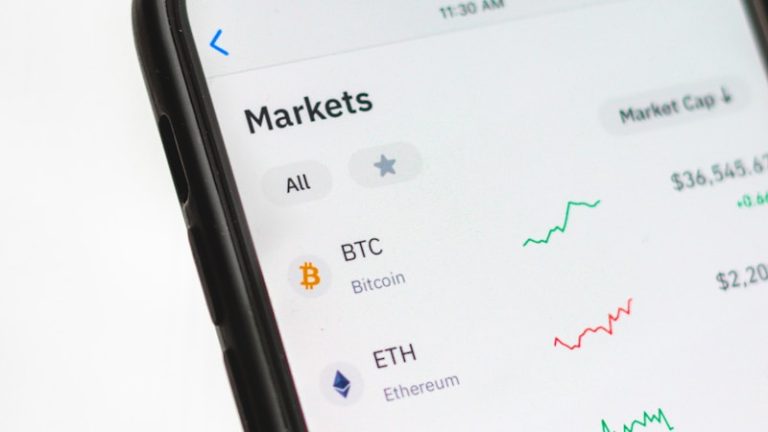
Bitcoin is back in the spotlight this week as the market’s leading cryptocurrency tests a major psychological support level at $60,000. At the time of writing, BTC is trading at $62,145, down 2.05% over 24 hours, drawing dangerously close to the $60,000 threshold — a level that holds significance both from a technical standpoint and as a psychological marker for investors. This fresh wave of bearish pressure arrives against a tense macroeconomic backdrop marked by surging oil prices and escalating geopolitical tensions surrounding Iran, two factors that weigh heavily on risk assets.
Oil Surges, Bitcoin Takes the Hit
The primary catalyst behind this downward move is undeniably the surge in crude oil prices. The price of oil has jumped over 5% in the last 48 hours, driven by the collapse of ceasefire negotiations involving Iran. Brent crude has exceeded $85 a barrel — a level not seen in several months — while the American WTI benchmark has crossed the $82 mark. This sudden spike in energy prices is sending ripple effects across all financial markets, as Bitcoin becomes increasingly correlated with traditional assets, particularly US stock indices such as the S&P 500 and the Nasdaq.
This growing correlation between Bitcoin and traditional markets has been a well-documented phenomenon since the start of 2025. As institutional adoption has accelerated, particularly through spot Bitcoin ETFs in the United States, the cryptocurrency now more closely mirrors the sentiment of traditional equity markets. When macroeconomic fears intensify — persistent inflation, geopolitical tensions, rising energy costs — Bitcoin often follows the same trajectory as stocks, a trend that has been confirmed on several occasions over recent months.
The Iran Crisis: A Major Geopolitical Factor
Tensions surrounding Iran form the second pillar of this downward movement. The collapse of Middle East ceasefire talks has reignited fears of regional escalation, with potential consequences for global energy supplies. As Iran is one of the OPEC’s major oil producers, any disruption to its production or to maritime routes through the Strait of Hormuz would have immediate and severe repercussions on oil prices, and by extension, on global financial markets as a whole.
For Bitcoin, this unstable geopolitical environment creates additional pressure. In a context where investors are looking to reduce their risk exposure, volatile assets like cryptocurrencies are often the first to be sold. However, some analysts believe this dynamic could reverse in the medium term if tensions persist, as Bitcoin is sometimes seen as an alternative store of value in times of uncertainty — a narrative that echoes the “digital gold” story that BTC maximalists have championed for years.
The $60,000 Threshold: A Psychological and Technical Level
The $60,000 level holds particular importance for Bitcoin for several reasons. From a technical perspective, it is a support level that has been tested repeatedly over recent months and has held each time, providing a bounce point for buyers. From a psychological standpoint, it represents a powerful symbolic threshold: remaining above $60,000 is seen by a large portion of the crypto community as a sign of market health, while a breakdown below it could trigger mass selling through a panic effect.
On-chain data also provides valuable insight into the significance of this level. According to analysis from the Glassnode platform, the average cost basis of addresses that accumulated Bitcoin over the past six months sits right around the $58,000 to $62,000 range. A drop below $60,000 would therefore expose a significant portion of holders to unrealized losses, which could amplify selling pressure and accelerate the bearish move toward $55,000, or even $52,000 in a more aggressive downside scenario.
An Unfavorable Macroeconomic Environment
Beyond geopolitical factors, the broader macroeconomic environment is not favorable to risk assets in this mid-2026 period. The US Federal Reserve maintains a restrictive monetary policy, with benchmark interest rates remaining at elevated levels not seen since the 2008 financial crisis. This high-rate policy makes risk-free investments — such as US Treasury bonds — more attractive compared to volatile assets like cryptocurrencies, which mechanically reduces demand for Bitcoin and altcoins.
Furthermore, the correlation between Bitcoin and the US Dollar Index (DXY) has strengthened in recent weeks. As the dollar firms against other currencies, dollar-denominated assets become more expensive for international investors, which also weighs on Bitcoin prices. The DXY recently touched multi-month highs, adding additional pressure on crypto markets.
What Scenarios Lie Ahead in the Coming Days?
With Bitcoin sitting less than 3.5% from the fateful $60,000 threshold, several scenarios are taking shape for the next 24 to 48 hours. The first and most optimistic scenario would see BTC bounce off the $61,000-$61,500 level and climb back toward $64,000-$65,000, driven by bargain buying from institutional investors seeing an...
Analyse détaillée réservée aux membres
Notre équipe d'analystes a préparé une analyse complète avec données exclusives.
🔒 Paiement sécurisé • Stripe • Sans engagement
Déjà abonné ? Connectez-vous