Context: Why This Announcement Matters in 2025
In a maturing crypto market, Bitget Wallet’s launch of the Bitget Wallet Card in South Asia marks a strategic turning point. While digital asset adoption stalls in some developed regions, South Asia—including India, Bangladesh, Pakistan, Sri Lanka, and Nepal—represents a pool of 1.8 billion people, many unbanked or underbanked. According to the World Bank, nearly 40% of South Asia’s population lacks access to traditional financial services. Bitget Wallet, a non-custodial wallet focused on everyday finance, is now offering a physical and virtual card that lets users spend cryptocurrencies directly at merchants. This move comes as local regulators, such as the Reserve Bank of India, experiment with central bank digital currencies (CBDCs) but struggle to gain public traction. The Bitget Wallet Card could fill the gap by providing a decentralized alternative with no bank intermediary, lower fees, and instant conversion to fiat (INR, PKR, BDT, etc.).
Market Analysis: Price, Cap, and Trends
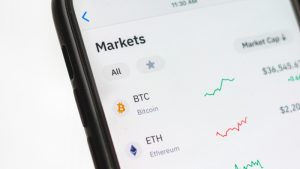
As of writing, the global crypto market cap stands at $2.85 trillion, up 12% in the past month, driven by renewed interest in payment solutions. Bitcoin (BTC) trades at $67,400, while Ethereum (ETH) hovers around $3,200. Native tokens of wallets and payment solutions, like Bitget’s BGB token, surged 18% since the announcement to $1.25. This aligns with a broader trend: non-custodial wallet transaction volumes rose 35% quarter-over-quarter, per DappRadar. South Asia, in particular, is seeing explosive stablecoin adoption, with USDT and USDC volumes on Indian centralized exchanges growing 250% since the 30% crypto capital gains tax was imposed in 2022. Users seek ways to bypass restrictions while retaining asset custody. The Bitget Wallet Card meets this need with a seamless interface: users load the card with USDT, USDC, BTC, or ETH, and the wallet auto-converts to local fiat at payment with a spread of just 0.5%. In comparison, traditional cards like Crypto.com Visa or Binance Card charge 1–2% conversion fees. Moreover, Bitget Wallet emphasizes no strict KYC for small transactions—a key advantage in a region where identity documents are scarce. Chainalysis data shows that South Asia accounts for 15% of global crypto transaction volume, with peer-to-peer exchanges dominating. The Bitget Wallet Card could accelerate this trend by bridging the gap between crypto holdings and everyday spending.
📬
Get the weekly crypto briefing
Analysis, trends and opportunities — straight to your inbox.