DeFi’s Quiet Re-Rating: Bitwise, Aave Vaults, $7.2B Migrate to Chainlink — The Silent Comeback
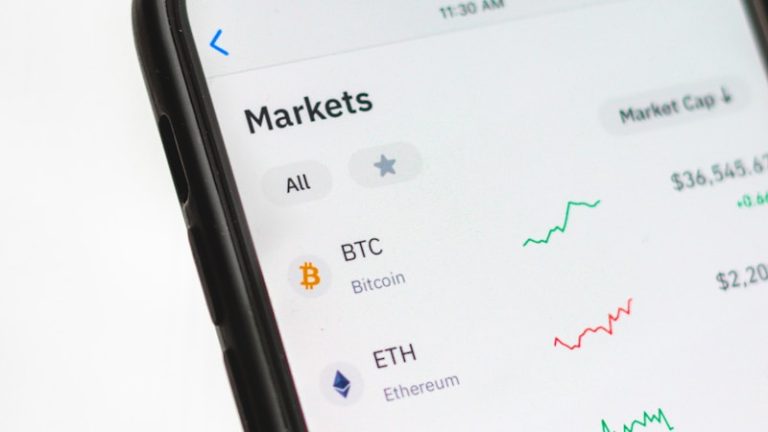
Paris — While the cryptocurrency market navigates a consolidation phase — with Bitcoin at $64,406 and Ethereum at $1,801 struggling to reclaim their highs — a quieter phenomenon is drawing the attention of analysts and institutional investors. Decentralized finance (DeFi), which many had written off after the summer of 2022 and the cascade of shocks that shook the sector, is undergoing what Bitwise Asset Management describes as a « quiet re-rating » — a silent reassessment of its fundamentals and valuation.
This renewed interest in DeFi is not manifesting through spectacular rallies in governance tokens or a return to the triple-digit yields that characterized the summer of 2020. It is taking a more discreet but potentially more sustainable form: measured capital movements, structured financial products tailored to traditional investors, and a massive technological migration toward infrastructures considered safer and more interoperable.
In this analysis, we examine the three elements that form the fabric of this quiet re-rating: Bitwise’s investment thesis, the innovation of Aave vaults for traditional finance, and the record migration of $7.2 billion from LayerZero to Chainlink CCIP — a powerful signal for the future of interoperability.
1 — The Bitwise Thesis: Why DeFi Is Quietly Outperforming
On July 9, 2026, Bitwise Asset Management — one of the largest crypto index fund issuers in the United States, known for its SEC-approved Bitcoin and Ethereum ETFs — published a research note in which its analysts assert that DeFi is in the process of a « quiet re-rating ». According to Bitwise analysts, DeFi has demonstrated superior relative performance compared to Bitcoin across several recent time windows, without this outperformance making headlines in mainstream financial media.
Bitwise’s observation rests on a simple yet striking insight: while Bitcoin remains the flagship of the sector and captures the lion’s share of media attention, DeFi protocols — those lending, borrowing, exchange, and yield platforms operating without centralized intermediaries — are quietly accumulating rising usage metrics. The aggregate total value locked (TVL) across major DeFi protocols has seen notable growth since the beginning of the year, despite a global crypto market that remains cautious.
This « quiet re-rating » thesis echoes a dynamic that savvy investors have been observing for several months. The most established protocols — Aave, Uniswap, MakerDAO, Compound — generate substantial recurring revenues through protocol fees and interest earned on deposited liquidity. In an environment where interest rates are normalizing globally, these revenues are becoming increasingly attractive for yield-seeking investors.
Bitwise is not suggesting that DeFi is about to return to the extravagant valuation levels of 2021. The thesis is more nuanced: the market is gradually internalizing the fact that DeFi is not dead, that it has survived its worst existential crises, and that it has emerged with stronger fundamentals, more mature governance, and a more resilient user base. This rebalancing of perceptions, according to Bitwise, is the primary driver of the ongoing re-rating.
The numbers support this view. Despite the broader market’s sideways movement, several leading DeFi protocols have posted revenue growth quarter over quarter. Lending platforms have seen borrowing demand increase as users seek leverage or liquidity without selling their core holdings. Decentralized exchanges have maintained steady trading volumes, capturing market share from centralized counterparts that continue to face regulatory headwinds and trust issues following the FTX collapse and subsequent exchange failures.
Bitwise’s research further highlights that the DeFi sector’s price-to-earnings dynamics, when measured against the revenue generated by protocol treasuries, are at levels that historically precede significant appreciation. While the firm stops short of making explicit price predictions, the implication is clear: the market has not yet fully priced in the resilience and revenue-generating capacity of the leading DeFi protocols. This valuation gap is precisely what the quiet re-rating is beginning to close.
2 — Aave Vaults: A Gateway for Fintech Investors
Simultaneously, Aave, one of the largest decentralized lending protocols in the sector with several billion dollars in liquidity, has made an announcement that fits perfectly within this underlying trend. The protocol has launched a new range of vaults — structured capital pooling products — specifically designed for fintech investors and traditional finance players seeking exposure to DeFi yields without having to manage the underlying technical complexity.
These Aave vaults are not merely a copy of existing products on the market. They distinguish themselves through several features that make them particularly well-suited for institutional investors: automated risk management, yield optimization through dynamic allocation strategies across different liquidity pools, and most importantly, an enhanced compliance framework that meets the regulatory requirements of investment funds.
To understand the significance of this initiative, one must recall the context. Until now, one of the main barriers to institutional adoption of DeFi was the gap between the user experience of decentralized protocols — often technical, requiring private key management and a thorough understanding of smart contract risks — and the standards of traditional finance, where custody, compliance, and operational simplicity are paramount.
Aave vaults bridge this distance. By offering an investment vehicle that aggregates DeFi yields while providing an interface compatible with the expectations of fintech investors, Aave creates an additional bridge between the two worlds. Funds deposited in these vaults are allocated to various liquidity pools on the Aave protocol, generating interest that depends on supply and demand for each asset. This automated allocation reduces the need for active management while still capturing the yields that the DeFi lending market offers.
Aave’s strategy is not an isolated move. It fits within a broader movement of « real-world asset tokenization » (RWA) and institutional decentralized finance that has been gaining momentum since the beginning of the year. Platforms like BlackRock, Goldman Sachs, and Franklin Templeton are also exploring the integration of DeFi into their offerings, but Aave has the advantage of the flexibility and speed of execution that only a decentralized infrastructure can provide. While traditional giants move through committees and regulatory consultations, Aave can iterate, deploy, and scale at the speed of smart contract development.
The vaults also address one of the most persistent pain points for institutional capital: the operational burden of yield farming. In 2021, accessing DeFi yields required users to navigate multiple protocols, manage complex positions across chains, and remain vigilant about smart contract risks, impermanent loss, and shifting incentive structures. The Aave vaults abstract away this complexity entirely. An institution deposits stablecoins or ETH into a vault, and the protocol handles the rest — rebalancing positions, compounding yields, and managing liquidation risk automatically.
For retail investors, these vaults also represent an opportunity to access optimized yield strategies without having to perform the complex operations of « yield farming » that were the norm in 2021. The promise is simple: deposit assets, let the protocol work, receive interest. An evolution that brings DeFi closer to the classical banking experience, but with potentially superior yields. This lowering of the barrier to entry could prove to be one of the most significant drivers of TVL growth in the coming quarters, as capital that was previously unwilling to navigate the technical complexities of DeFi now has a straightforward on-ramp.
3 — $7.2 Billion Migrates from LayerZero to Chainlink CCIP: A Historic Infrastructure Shift
The third strong signal of this quiet re-rating is arguably the most striking in its scale: no less than $7.2 billion in total value locked (TVL) has migrated from the LayerZero interoperability protocol to Chainlink CCIP (Cross-Chain Interoperability Protocol), a cross-chain communication standard developed by Chainlink, one of the most established projects in the crypto ecosystem.
To measure the importance of this migration, one must recall the crucial role that interoperability protocols play in DeFi. In a world where digital assets are distributed across dozens of blockchains — Ethereum, Arbitrum, Optimism, Polygon, Base, Avalanche, Solana, to name just the major ones — the ability to transfer assets and data securely from one chain to another has become an absolute necessity. Cross-chain bridges and interoperable messaging protocols are the DeFi equivalent of payment rails in traditional finance. Without them, the multi-chain vision of Web3 collapses into isolated, siloed ecosystems that cannot communicate or share liquidity.
The $7.2 billion moving from LayerZero to Chainlink CCIP represents one of the largest capital movements ever observed between two infrastructure protocols in the history of DeFi. This transfer is not the result of chance or an isolated decision. It is the outcome of a collective assessment by development teams and protocol treasuries, who have judged that Chainlink CCIP offers superior security guarantees. The magnitude of this shift suggests a coordinated reassessment rather than a series of independent decisions — a market consensus forming around a new standard.
One of the triggering elements for this migration is the adoption of Chainlink CCIP by Mantle, the layer-2 (L2) solution associated with the Mantle Network layer-1 blockchain. By joining Chainlink’s interoperability standard, Mantle sent a strong signal to the entire ecosystem: the security and reliability offered by Chainlink’s Oracle node network are now considered the gold standard for cross-chain communication. Mantle’s decision carries particular weight given its position as a major L2 ecosystem with significant TVL and developer activity.
This $7.2 billion movement is not merely a technical transfer. It has profound implications for the DeFi ecosystem as a whole. First, it confirms that security criteria now prevail over speed or cost in the choice of infrastructure by DeFi protocols. The lessons of the cross-chain bridge attacks that caused losses of several billion dollars in 2022 and 2023 — notably the Ronin bridge hack and the Wormhole bridge incident — have been learned. The market has voted with its capital, choosing the more battle-tested infrastructure.
Second, this shift reinforces Chainlink’s position as the backbone of DeFi infrastructure. Already the undisputed market leader in Oracle services (those services that allow blockchains to connect to real-world data, such as financial asset prices), Chainlink is extending its reach into the interoperability layer. CCIP is not simply another bridge: it is a general-purpose messaging protocol that enables not only asset transfers but also data transmission and function calls between blockchains. This programmability is critical for advanced DeFi applications that require cross-chain composability.
Third, this massive migration could accelerate a network effect. The more capital that flows through an interoperability protocol’s rails, the more attractive it becomes for new entrants, who want to be where liquidity and security converge. By reaching the symbolic threshold of $7.2 billion in migrated TVL, Chainlink CCIP establishes itself as the de facto standard for interoperability — a status that LayerZero, despite its technical merits, will find difficult to challenge. The economics of interoperability protocols are winner-take-most: liquidity concentrates where other liquidity already resides, creating a powerful moat for the leading standard.
4 — Synthesis: The Three Pillars of a Comeback That Doesn’t Advertise Itself
Stepping back and looking at the big picture, three parallel trends outline the contours of what Bitwise calls the « quiet re-rating » of DeFi.
First pillar — The investment thesis. Bitwise’s analysts are not the only ones to perceive this movement. DeFi’s relative outperformance compared to Bitcoin is an observable fact across protocol revenue metrics, TVL, and transaction volumes. This rebalancing of valuations is the result of a progressive recognition by the market that DeFi protocols have become viable infrastructure, revenue-generating and equipped with sustainable economic models. The fundamentals have improved even as token prices have remained subdued, creating a divergence that the re-rating is gradually correcting.
Second pillar — Product innovation. The launch of Aave vaults for fintech investors shows that DeFi is not simply waiting for users to come to it. It is actively building bridges to traditional finance, adapting its products to the compliance, risk management, and ease-of-use requirements that prevail in the regulated finance world. These vaults could well be the Trojan horse that allows DeFi to penetrate institutional portfolios in a meaningful way. By packaging DeFi yields into familiar investment vehicles, protocols like Aave are removing the last major friction points that kept institutional capital on the sidelines.
Third pillar — Infrastructure consolidation. The migration of $7.2 billion from LayerZero to Chainlink CCIP, amplified by Mantle’s arrival in the Chainlink ecosystem, is a signal of the sector’s maturation. DeFi protocols are now making their infrastructure choices not based on technological novelty or short-term economic incentives, but on criteria of proven security and long-term reliability. This is the sign that DeFi is entering its « utility » phase, where usage prevails over speculation. Infrastructure standardization is a hallmark of maturing industries, and DeFi is following that same trajectory.
These three pillars reinforce each other. A stronger investment thesis attracts more capital, which flows through products like Aave vaults, which in turn requires more robust infrastructure, which Chainlink CCIP provides. This virtuous cycle is the engine of the quiet re-rating, and it operates largely below the radar of mainstream crypto media coverage.
5 — Conclusion: A Bear Market That Isn’t One for DeFi
It would be tempting to look at Bitcoin’s price of $64,406 and Ethereum’s price of $1,801 and conclude that the crypto market is stalled. But that reading would be incomplete. Beneath the surface, DeFi is moving. It is evolving. It is attracting institutional capital through new channels. It is consolidating its infrastructure around safer standards. Silently, it is building the foundations for its next phase of growth.
The quiet re-rating thesis stands in stark contrast to the prevailing narrative that the crypto market is in a prolonged slump. While attention-focused metrics like social media engagement and search interest may be down, the on-chain metrics that matter — TVL, protocol revenue, active loans, stablecoin supply — tell a different story. DeFi is not waiting for a Bitcoin rally to validate its existence; it is building sustainable economic activity that can thrive regardless of Bitcoin’s price trajectory.
Of course, risks remain. Regulation, particularly in Europe with the entry into force of the MiCA regulation (Markets in Crypto-Assets), could impose additional constraints on DeFi protocols, especially in terms of anti-money laundering and investor protection. The technical risks associated with smart contracts, although reduced by increasingly rigorous audits, are never completely eliminated. And the global macroeconomic context — inflation, interest rates, geopolitical uncertainties — could at any moment alter capital flows toward digital assets. The quiet re-rating could be paused or reversed by external shocks beyond the control of the DeFi ecosystem.
But for now, the signals sent by Bitwise, Aave, and Chainlink converge toward the same conclusion: DeFi is not slowly dying, as some predicted after the collapse of Terra-Luna and the bankruptcy of FTX. It is redefining itself. And this process of redefinition, because it is discreet, because it plays out behind the scenes of infrastructure rather than in the market headlines, may be the most encouraging sign yet of its maturity.
The « quiet re-rating » of DeFi is not a promise of miraculous returns. It is an invitation to look beyond prices, beyond media cycles, and to recognize that decentralized finance is winning, step by step, the only battle that truly matters: the battle of concrete utility. While the market waits for the next bull run to ignite, DeFi is quietly building the foundations that will sustain the next wave of growth when it arrives.
📬
Get the weekly crypto briefing
Analysis, trends and opportunities — straight to your inbox.