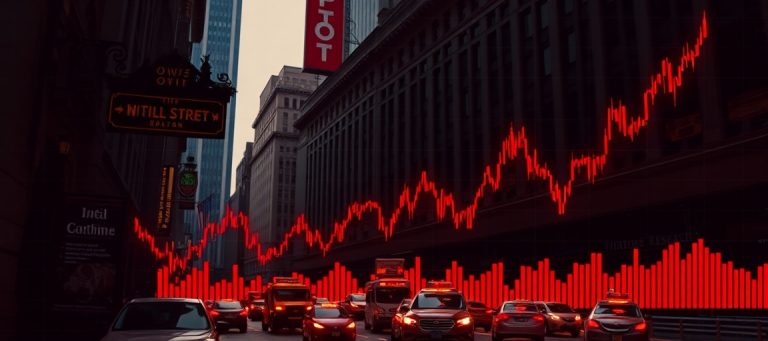
US Strikes on Iran: Bitcoin and Ether Prices Remain Stable
The United States launched a fresh wave of military strikes against Iranian positions this past weekend, marking a significant escalation in a conflict that has been simmering between the two nations for months. Yet cryptocurrency markets remained remarkably unfazed by this major geopolitical development. Bitcoin (BTC) is trading around $64,000 and Ether (ETH) hovers near $1,800 — levels virtually unchanged from where they stood the day before the strikes were announced. This complete absence of reaction raises an important question for market observers: does it prove that the crypto market has matured enough to absorb major geopolitical shocks without blinking? Or does it instead reflect a form of desensitization born from months of escalation and counter-escalation that have ultimately exhausted investor attention?
A Military Escalation That Should Have Shaken Markets
The new American strikes target Iranian military installations in the Gulf region, in response to actions Washington deemed hostile. The US administration justified the strikes as “necessary to protect American interests and those of its allies in the region.” Tehran swiftly condemned the actions, promising a response that would be “proportionate but firm.”
Under normal financial market conditions, this kind of geopolitical escalation typically triggers what is known as a flight to safety — investors rotate out of risky positions and into traditional safe havens like gold, the US dollar, and government bonds, while riskier assets such as equities and cryptocurrencies come under selling pressure. That is precisely what happened during previous US-Iran escalations in June and early July of this year, when Bitcoin briefly fell below the psychologically important $60,000 level.
But this time the scenario is different. BTC remained stable around $64,000; ETH never left its $1,780 to $1,810 range; and trading volumes on major platforms showed no unusual spikes. Data from CoinGlass confirms the absence of mass liquidations — a strong signal that the market did not panic.
The “Macro Desensitization” Hypothesis
One initial explanation for this lack of reaction lies in what analysts call “macro desensitization.” Since the beginning of 2026, cryptocurrency investors have faced an almost uninterrupted succession of geopolitical shocks: the Iran-US escalation, rising tensions in the South China Sea, the trade war with Europe, threats to block the Strait of Hormuz that sent oil prices soaring, and most recently the collapse of the Iranian ceasefire in early July. With each episode, Bitcoin initially dropped — sometimes sharply — before recovering fully within 24 to 48 hours.
This pattern has repeated often enough that algorithmic traders and institutional investors have learned to anticipate it. Today they understand that geopolitical-shock-driven declines are generally temporary in nature and frequently represent buying opportunities rather than reasons to flee the market. This ingrained rationality has the mechanical effect of reducing the magnitude of the market’s reaction to each new event. It is the hallmark of a market that is maturing: it processes information more quickly and with less volatility.
Blockchain data supports this interpretation. Despite the strike announcement, net Bitcoin flows to exchanges did not increase significantly — an important on-chain indicator that holders are not rushing to sell. On the contrary, data from Coin Metrics shows that the number of addresses holding at least one BTC continues to rise, suggesting that accumulation persists regardless of geopolitical noise.
The Crypto Safe Haven Thesis Put to the Test
The other possible reading, more optimistic in its implications, is that the cryptocurrency market is beginning to demonstrate a form of resilience that brings it measurably closer to “safe haven” status. Bitcoin has historically been described as “digital gold” — a decentralized, non-sovereign asset theoretically capable of serving as an effective hedge against geopolitical risks and inflation. In practice, however, BTC has for many years behaved like a risky asset, remaining highly correlated with US equity markets.
That correlation has nonetheless diminished considerably in recent months. Since early July, the correlation coefficient between Bitcoin and the S&P 500 has fallen to its lowest level since 2023, according to data from IntoTheBlock. This means BTC is beginning to behave increasingly independently of traditional markets — a shift that strengthens the safe haven thesis.
The fact that Bitcoin remains stable while military strikes are underway — an event that would traditionally trigger a dash for liquidity — is a strong signal pointing in this direction. If the trend continues, BTC could attract additional flows from investors seeking geopolitical coverage, a role that gold has traditionally occupied but which could be increasingly shared in the future.
The Role of Institutions and ETFs
Another important factor explains the relative calm: the massive presence of institutional investors operating through spot Bitcoin ETFs. These funds, which now collectively manage over $50 billion in assets, act as a powerful dampener on volatility. Unlike...
Analyse détaillée réservée aux membres
Notre équipe d'analystes a préparé une analyse complète avec données exclusives.
🔒 Paiement sécurisé • Stripe • Sans engagement
Déjà abonné ? Connectez-vous