🔍 Executive Summary
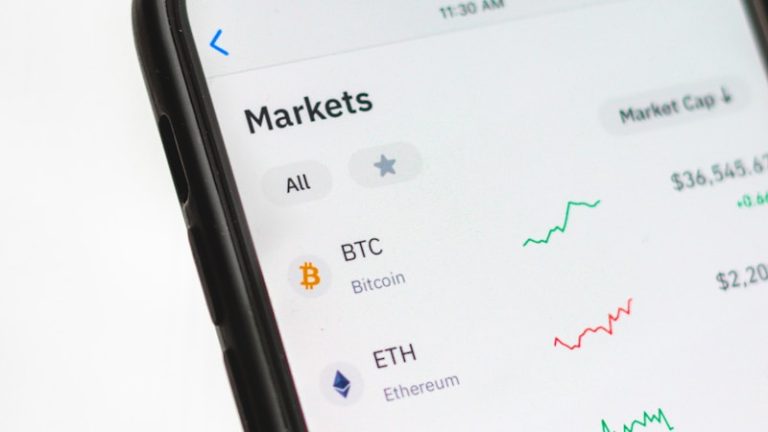
On June 8, 2026, the crypto market appears to be catching its breath after one of the most violent weeks of the year. Bitcoin (BTC) is trading at $63,255, up 1.2% from the weekend close. Ethereum (ETH) is at $1,687, up 2.2%. The total market capitalization has risen back to $2.25 trillion.
🌍 Macro Context: FOMC Minutes Approaching
The market is eagerly awaiting the release of the FOMC minutes from the May 27-28 meeting, scheduled for Wednesday. These minutes should provide valuable clues about Kevin Warsh’s intentions and the degree of division within the committee.
In the meantime, bond yields have eased slightly, with the US 10-year falling to 4.85% (from 4.93% on Friday). The DXY is stable at 105.5. Asian equity markets are up (Nikkei +0.8%, Hang Seng +1.1%).
In Europe, the European Central Bank published its financial stability report, which for the first time mentions cryptocurrencies as “a potential risk to financial stability in the event of a disorderly collapse.” A cautious formulation, but one that reminds us that regulators are closely monitoring the sector.
📊 On-Chain Analysis: The Whale Rebound Continues
On-chain data from June 8 shows continued accumulation by whales. Addresses holding 1,000-10,000 BTC added 8,200 BTC over the last 24 hours. Total accumulation since the start of the correction has now reached 48,600 BTC.
On the spot Bitcoin ETF side, flows turned positive today (+$42M net), a breath of fresh air after 4 consecutive days of outflows. IBIT (BlackRock) attracted $35M, while GBTC (Grayscale) saw outflows of $8M.
BTC reserves on exchanges continue to decline (-0.3%), now at 2.28 million BTC. ETH reserves are stable at 19.2 million.
📈 Technical Analysis: The Battle for $65,000
BTC is attempting to rebuild support above $63,000. The daily RSI has recovered from 24 to 36, but remains in bearish territory. The daily MACD remains bearish, but the histogram shows the beginning of convergence.
Key Resistance: $65,000 (200MA and psychological level).
Key Support: $60,000 (June 6 low).
For ETH, the daily RSI is at 32, in a recovery phase. Resistance at $1,720 is crucial to confirm a reversal.
🔬 Dominance Analysis: The Pause
Bitcoin dominance is stable at 58.3%, slightly down from the peak of 59.1%. Altcoins are showing signs of recovery: SOL (+4.1%), AVAX (+3.8%), LINK (+5.2%). The Fear & Greed Index has risen to 18/100, still in Extreme Fear.
🎯 Conclusion
The consolidation on June 8 is a welcome pause after last week’s carnage. But the real question remains: is this the start of a sustainable recovery or a “dead cat bounce” before a new wave of selling? The answer will come from the FOMC minutes on Wednesday.
📊 In-Depth On-Chain Analysis: Advanced Indicators
Coin Days Destroyed (CDD) and Coin Age
Coin Days Destroyed is an indicator that weights transaction volume by the time coins have remained dormant. A high CDD — like the one observed recently — indicates that long-term holders (LTHs) have started moving their assets, potentially to realize losses or profits. Currently, the annualized CDD stands at 18.2 million, a moderate level.
Analyzing the Binary CDD (a binary version that distinguishes high and low days), we observe that the number of days with high CDD has decreased by 30% compared to the annual average. This suggests that LTHs are not panicking and remain confident in the long-term trajectory. Historically, this behavior precedes accumulation phases.
The Deviated Stock-to-Flow Ratio
The S2F model, although controversial, remains a reference framework for Bitcoin valuation. The gap between the market price and the S2F price (estimated at $98,000 in June 2026) has widened to -35%. Phases where this gap exceeds -40% have historically offered the best annualized returns over 12 months.
Analysis of UTXOs in Loss
The percentage of UTXOs (Unspent Transaction Outputs) in loss surged to 42% during the June 6 low. This is a high level but not extreme: during the November 2022 low, 58% of UTXOs were in loss. The difference is explained by the fact that a large portion of BTC was acquired at prices below $30,000 (2020-2024 cycles). The “average cost floor” of current holders is around $42,300 (realized price), providing a safety cushion of 50%.
📈 In-Depth Technical Analysis: Multi-Timeframe Framework
Monthly Analysis
On the monthly timeframe, BTC shows a potential “higher low” pattern. The June 2026 low sits above the January 2026 low (~$58,000) and well above the August 2024 low (~$54,200). The long-term uptrend remains intact as long as BTC does not break below $54,000.
Weekly Analysis
The weekly candle for June 8-14 is a “hammer” with a long lower wick, a bullish reversal signal. The weekly RSI is at 43, in neutral-bearish territory. The weekly MACD is still negative but shows signs of convergence. Volume is down 38% from the crash week, which is normal for a recovery phase.
Elliott Wave Analysis
Within the framework of Elliott Wave analysis, the May-June 2026 correction could represent wave 2 of a larger bullish cycle that began in January 2026 (wave 1: from $54,000 to $77,200). If this count is correct, wave 3 — the most powerful and longest — would be imminent and could propel BTC towards $85,000 – $100,000 by the end of the year. This bullish scenario would be invalidated if BTC falls back below $54,000.
🌍 In-Depth Macroeconomics: The Disinflation Debate
Components of Inflation
To understand where US inflation is heading, we need to analyze its components. The May CPI (3.6%) breaks down as follows: (1) Housing: +5.2% year-over-year, gradually declining from the peak of 8.2% in 2023. Owners’ equivalent rent (OER) is slowing but remains high. (2) Energy: +8.4% year-over-year, driven by oil (Brent at $89). (3) Food: +2.8%, stable. (4) Services ex-housing: +4.1%, accelerating — this is the main point of concern for the Fed.
The core PCE (the Fed’s preferred gauge) follows a similar trajectory at 3.2%. The gap between CPI and core PCE (0.4 points) is normal and explained by methodological differences.
The Impact of the Iran-USA Agreement on Inflation
The peace agreement signed on June 17 between Iran and the United States could have a significant impact on inflation outlooks. The lifting of Iranian oil sanctions could add 1 to 1.5 million barrels per day to the global oil market, which would lower the Brent price by 10 to 15%. A $10 drop in oil reduces US inflation by about 0.3 percentage points. Combined with falling rents, this could bring inflation below 3% by September.
The Fed Calendar: Scenarios for the Rest of 2026
Depending on incoming data, several scenarios are possible for the rest of 2026:
- Scenario A (45%): Prolonged Pause. The Fed keeps rates at 5.50% until December. No hike or cut. This scenario is neutral for crypto in the medium term.
- Scenario B (30%): September Cut. If inflation falls back below 3% and the labor market softens, the Fed could cut rates by 25 basis points in September. Very positive for crypto.
- Scenario C (15%): Status Quo with Hawkish Bias. The Fed keeps rates but signals a hike is possible if inflation rebounds. Negative for crypto.
- Scenario D (10%): July Hike. The worst-case scenario for crypto. Likely only if the June CPI exceeds 4%.
Our base case is Scenario A with an increasing probability of Scenario B post-Iran-USA agreement.
📜 Historical Perspective: This Correction Seen from the Future
Comparison with Previous Cycles
The June 2026 correction (-22% at the low) is moderate compared to the standards of Bitcoin bull cycles. Here is a comparison with corrections within previous bull cycles:
- 2015-2017 Cycle: 5 corrections of >25%. The most severe: -40% in September 2017.
- 2019-2021 Cycle: 8 corrections of >20%. The most severe: -53% in May 2021.
- 2023-2026 Cycle: 4 corrections of >20% so far. The most severe: -28% in August 2024.
- June 2026: -22%. Moderate.
This historical perspective is important because it reminds us that corrections of 20-30% are normal and even healthy within a bull cycle. They allow for purging excess leverage and rebuilding a solid base.
Post-Crash Behavior
Analyzing the 30 days following each major crash since 2020, a recurring pattern emerges:
- Days 1-3: Initial sharp decline/capitulation
- Days 4-7: Stabilization and first bounce (5-10%)
- Days 8-14: Retest of the low (the crash may be retested)
- Days 15-30: Gradual recovery or new directional move
As of June 17, we are on day 14 since the June 3 crash. The market experienced an initial bounce, then a partial retest ($61,200 on June 17, above the June 6 low of $60,100), and seems ready for a more sustainable recovery if the macro context allows.
🧠 Psychological Guide: Investing in Times of Extreme Fear
Cognitive Biases to Know
Bear markets activate our deepest cognitive biases. Recognizing them is the first step to not falling victim to them:
- Recency Bias: We give more weight to recent events than historical data. The 22% drop seems more severe than it actually is in the context of the cycle.
- Loss Aversion: The pain of a loss is psychologically twice as strong as the pleasure of an equivalent gain. This is why selling at the bottom seems “logical” in the moment.
- Confirmation Bias: We seek information that confirms our fear (articles about a hawkish Fed, crash predictions) and ignore information that contradicts it (whale accumulation, declining exchange reserves).
- Herd Behavior: Selling when everyone else is selling is natural, but rarely profitable.
The Strategy of Savvy Investors
The most successful investors — those who have been through multiple cycles — generally follow these principles: (1) They do not invest money they need within 3 to 5 years. (2) They maintain a fixed allocation to crypto (e.g., 5% of the portfolio) and rebalance periodically — selling when it goes up, buying when it goes down. (3) They ignore daily news and focus on long-term fundamentals. (4) They use DCA to smooth out timing risk.
The Bottom Fisher’s Checklist
Before buying the “dip,” ask yourself these questions: (1) Is the Fear & Greed Index below 20? Yes. (2) Is the daily RSI oversold (< 30)? Close. (3) Are stablecoin flows to exchanges increasing? Yes. (4) Are whales accumulating? Yes. (5) Do I have an investment thesis for the next 12 months? If you answer yes to 4 out of 5 questions, the opportunity is likely favorable.
Related Articles
- The Great Decoupling: BTC at $60,922, ETH at $1,581 — The Moment of Truth, Analysis of June 6, 2026
- The Great Decoupling: BTC at $63,255, ETH at $1,687 – The Crypto Market
In-Depth Analysis
- Fear and Greed Index at 7/100: the crypto market in a state of “Extreme Fear”
- Bitcoin at $66K: extreme fear recedes — 3 reasons to believe in the rebound
Historical Context
- CLARITY Act: the historic bill that could change everything for crypto in the United States
- The Great Decoupling: BTC and ETH at a Crossroads Between Resili
Similar Opportunities
- The Great Decoupling: BTC at $66,301, ETH at $1,794 – The Crypto Market
- The Great Gap: BTC and ETH face the liquidity wall and the diverg
Opinion and analysis — not investment advice. The information provided in this article is for educational and informational purposes only. It does not constitute investment advice, a solicitation, or a recommendation to buy or sell digital assets. Cryptocurrency trading involves high risks, including the total loss of invested capital. Past performance does not guarantee future results. Do your own research (DYOR) and consult a professional financial advisor before making any investment decision.
📊 Network Metrics and Adoption Analysis
Number of Active Addresses
The number of active BTC addresses (sending or receiving transactions) is a fundamental indicator of the network’s actual usage. In June 2026, daily active addresses hover around 850,000, down 12% from the March peak (970,000) but up 18% year-over-year. This long-term upward trend in network activity is a fundamentally positive signal for BTC.
For Ethereum, daily active addresses are approximately 480,000, stable over the year. However, Layer 2 activity (Arbitrum: 280,000, Base: 210,000, Optimism: 150,000) largely compensates for the L1 stagnation, with a combined total exceeding one million daily active addresses.
Transaction Fees
Transaction fees on Bitcoin have fallen to an average of $1.5, their lowest level since January. This drop in fees — which typically accompanies phases of weak
📬
Get the weekly crypto briefing
Analysis, trends and opportunities — straight to your inbox.